Summary:
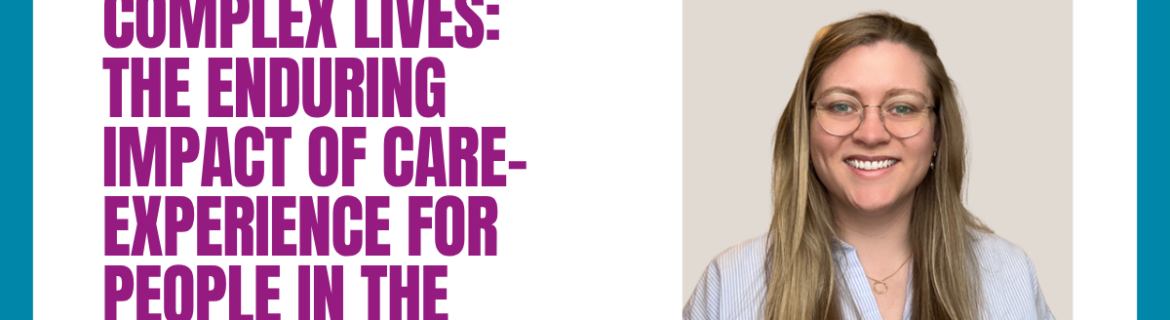
Children with experience of out-of-home care are criminalised at five times the rate of their peers. In this webinar, Dr Hope Kent will present findings from two studies examining the long-term legacy of care-experience for adults who are in the criminal justice system. Drawing on data from about 3,000 prisoners in a male prison in Wales, and 66 women in contact with the criminal justice system in Wales, Dr Kent will explore how the vulnerabilities associated with care-experience do not end in childhood but endure to shape the life-course of those in contact with the justice system. For women, these vulnerabilities also intersect with gendered pathways into the justice system, including domestic abuse and acquired brain injury, and dramatically elevated rates of suicide attempts. Dr Kent considers what these findings mean for children’s services and social care practice, and how early identification of neurodisability and investment in care leavers can disrupt these cycles of disadvantage.
[Content warning: This webinar will include discussion of domestic abuse, acquired brain injury, and suicidality. Please prioritise your wellbeing and attend only if it feels right for you and take breaks as needed]
Bios:
Dr Hope Kent is a Research Fellow at the University of Nottingham, working on a project funded by the Leverhulme Trust. Her research primarily uses administrative data to understand why children and young people with neurodisabilities (particularly acquired brain injury) are over-represented in the criminal justice system, and what we could do upstream in health, education, and social care to prevent this. Hope is a qualified Psychological Wellbeing Practitioner and has experience in the NHS, specialising in delivering mental health interventions for people with long-term health conditions. She co-ordinates the UKABIF Acquired Brain Injury Justice Network, and the TRYJustice Network.
Presentation slides:
Click here to download the presentation slides: CYCJ Presentation
Relevant links:
Looked after children in prison as adults: life adversity and neurodisability
Further resources from CYCJ:
CYCJ Webinars – CYCJ’s upcoming webinars.
CYCJ E-bulletin – Sign up to receive our e-bulletin
CYCJ has a new e-Learning platform! Click here to find out more.
New module on Tackling Harmful Sexual Behaviour is out now: M141: Tackling Harmful Sexual Behaviour | Centre for Lifelong Learning
eLearning module: Rights respecting in residential care
Post graduate certificate in children and young people in conflict with the law
Further resources on this topic: